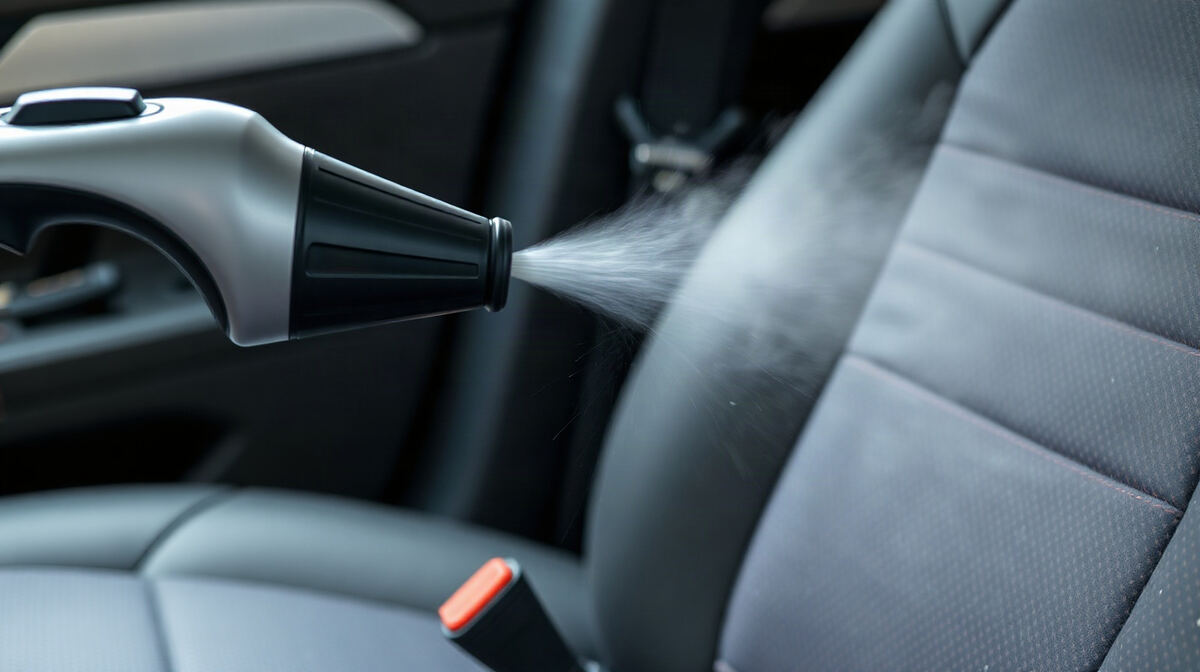
Which car chair cleaner do you need?
Start by checking your seat material. The owner's manual or the vehicle's original spec sheet will say. Many seats sold as "leather" are partly or entirely synthetic leather (vinyl or polyurethane), and many sporty trims use Alcantara inserts with leather or vinyl bolsters, so one seat can need two cleaners.
| Seat material | Cleaner type | Agitate with | Avoid |
|---|---|---|---|
| Fabric (cloth) | Foaming carpet and upholstery cleaner | Soft upholstery brush, microfibre | Soaking the foam, household bleach |
| Leather (coated) | pH-balanced leather cleaner, ideally foam | Soft horsehair brush, microfibre | All-purpose degreasers, solvents, magic erasers |
| Vinyl or synthetic leather | Mild interior cleaner or leather cleaner | Soft brush, microfibre | Silicone dressings on seat surfaces, solvents |
| Alcantara and microsuede | Dedicated Alcantara cleaner or very mild solution | Soft brush, slightly damp microfibre | Steam, chlorine bleach, heavy wetting |
Whatever the material, test any cleaner on a hidden area first, such as the side of the seat base or under a headrest.
How to clean fabric car seats
- Vacuum thoroughly with a brush tool and crevice tool, working into the seams and the gap between base and backrest. Dry grit turns to mud once the seat is wet.
- Pre-treat stains with an appropriate stain remover (see below) and give it a few minutes.
- Apply foam lightly to one panel at a time. Foaming cleaners clean with less water than liquid sprays.
- Agitate gently with a soft upholstery brush in overlapping passes. Stiff carpet brushes can fuzz the fabric (see our car cleaning brushes guide for which brush suits which surface).
- Lift the dirt with a clean, slightly damp microfibre towel, or better, a wet vacuum or extractor.
- Dry quickly with airflow, as covered further down.
Our car interior cleaning guide covers the full order of work for the rest of the cabin.
How to clean leather and vinyl seats
Most car leather is coated (pigmented) leather with a protective topcoat, which is why it cleans well with mild products and is damaged by harsh ones. The aim is to lift body oils and dirt out of the grain without stripping that coating.
- Vacuum the seams and perforations with a soft brush tool.
- Put foam cleaner on a soft brush or applicator, not straight onto the seat, so it doesn't soak into stitching or perforations.
- Work one panel at a time with light pressure, paying attention to bolsters and the driver's seat edge where wear starts.
- Wipe the dirty foam off with a clean, slightly damp microfibre, then dry with another.
- If you use a conditioner or protectant, apply a thin coat and buff off any excess so the seat isn't slippery.
On perforated leather, use even less product and a lighter brush, so cleaner doesn't collect in the holes. Vinyl and synthetic leather don't absorb conditioners the way leather does, so a mild cleaner is usually all they need. Avoid silicone shine products on any seat you sit on.
How to clean Alcantara and microsuede seats
Alcantara is a synthetic microfibre material, not suede, and it has its own care rules. Alcantara's own washing instructions advise avoiding direct contact with steam appliances, recommend spray extraction machines at low temperatures for fitted upholstery, and say the material must not be bleached with chlorine. It also notes that dust and grit in the material can damage the surface, so regular gentle vacuuming matters.
In practice: vacuum with a soft brush tool, dampen a microfibre cloth very lightly with an Alcantara-specific cleaner or a mild solution, wipe in one direction, then brush the nap back up once dry. Never scrub, and never soak it.
Stains: coffee, milk, kids and pets
Treat stains as early as you can and always blot, don't rub. Rubbing spreads the stain and pushes it deeper into the foam.
- Black coffee and tea: blot up as much as possible, dab with cool water, then use a fabric cleaner. Coffee with milk is also a protein stain, so follow the milk advice.
- Milk, formula, vomit and food: remove solids, then clean with cool water and an enzyme-based stain remover. Hot water can set protein stains, and milk that soaks into seat foam will smell for weeks if it isn't fully extracted.
- Kids' drinks, juice and lollies: blot, then use upholstery cleaner. Sticky sugar residue rinses out with a damp cloth before you clean.
- Crayon and chocolate: lift off as much as you can with a plastic card once hard, then treat the remaining mark with upholstery cleaner.
- Pet urine and accidents: blot, then use an enzyme pet stain and odour remover, which breaks down the compounds that cause the smell rather than covering them.
- Pet hair: a rubber pet hair brush or damp rubber glove lifts it from fabric before you vacuum.
On leather, wipe spills straight away and use leather cleaner only. Enzyme and fabric stain removers are made for textiles.
Extractors and steam: when they help
A spot extractor (wet vacuum) sprays clean water or solution into the fabric and sucks it back out. It removes far more dirt and moisture than wiping, which is why it is the best tool for milk, vomit and pet accidents on cloth seats. Handheld units are sold in New Zealand for home and car use.
Steam loosens grime and sticky residue on fabric, hard plastics and seat rails with very little liquid. It is not suitable for every surface: Alcantara advises against it, and leather and some adhesives used in seats and headliners can be damaged by heat. Our steam cleaning guide covers where steam is safe and where it isn't.
Drying seats in New Zealand's humid weather
NIWA describes Auckland's summers as warm and humid, with plentiful rain year-round. In that air, a soaked seat cushion can stay damp inside for days, which is how musty smells and mould start. To dry seats fast:
- Use as little liquid as possible, and extract it rather than leaving it to evaporate.
- Clean on a dry day, in the morning, so you have the warmest part of the day for drying.
- Leave doors or windows open in a secure spot, or run the engine with the air conditioning on fresh air. Air conditioning dries the air as it cools it.
- Point a household fan into the cabin, or put towels on the seats to wick moisture from the surface.
- Don't close the car up until the seat feels dry when you press firmly into it.
What car seat cleaners are sold in NZ
At the time of writing (November 2026), Supercheap Auto NZ lists fabric cleaners including SCA Carpet & Upholstery Cleaner 500g at $8.99, Armor All Ultra Carpet & Upholstery Cleaner at $27.99, Turtle Wax Power Out Upholstery Cleaner at $31.99 and Meguiar's Carpet & Upholstery Cleaner at $40.99. Its leather care range runs from SCA Leather Shampoo Cleaner at $14.99 to Bowden's Own Leather Love at $38.99, Chemical Guys Leather Cleaner at $39.99 and Meguiar's Gold Class Leather Cleaner and Conditioner at $49.99. Bissell's Pet Stain and Odour Remover is $26.99, and the Bissell Spot Clean Auto-Mate extractor is $289.99.
Bunnings NZ lists CRC Carpet and Upholstery Cleaner 550ml at $13.90 and Mothers Carpet & Upholstery Cleaner 710ml at $34.46, and for leather, Oakwood Automotive Leather Foam Cleaner 150mL at $13.98 and Glitz Leather Cleaner 500ml at $21.69.
When choosing, look for: the right material on the label, a foam or low-moisture format, an enzyme formula if you are dealing with milk or pets, and no strong solvents for leather. Prices change often, so check before you buy.
What to avoid on car seats
- Household bleach and chlorine products, which strip colour from fabric and Alcantara.
- Degreasers and strong all-purpose cleaners on leather, which can dry out or remove the topcoat.
- Melamine sponges (magic erasers) on leather, which are mildly abrasive and can wear through the colour coat.
- Soaking the seat, which wets the foam and can stain the fabric with brown tide marks as it dries.
- Heat guns and hair dryers held close, which can shrink leather and damage adhesives.
- Silicone dressings on seating surfaces, which leave seats slippery and transfer to clothes.
When to use a professional
DIY cleaning handles regular upkeep and fresh spills. A professional interior clean makes more sense for old milk or vomit that has soaked into the foam, pet urine smells that keep coming back, mould, heavy staining across all seats, or worn and cracked leather that needs repair rather than cleaning. Detailers use commercial hot-water extractors that pull moisture back out of the foam, which is hard to match with handheld units. Or let us do it: get a quote for an interior car clean in Auckland.
Frequently asked questions
What is the best car chair cleaner?
The best cleaner is the one made for your seat material: a foaming upholstery cleaner for fabric, a pH-balanced leather cleaner for leather, a mild interior cleaner for vinyl, and a dedicated gentle cleaner for Alcantara. Test it on a hidden area first.
Can I use household carpet cleaner on car seats?
On fabric seats, a household carpet and upholstery cleaner often works if you use it sparingly and extract the moisture. Don't use it on leather, vinyl or Alcantara, and avoid anything containing bleach.
How do I get spilt milk out of a car seat?
Blot up as much as you can, then clean with cool water and an enzyme stain remover, and extract the liquid with a wet vacuum if possible. Avoid hot water, which can set the protein. If the milk soaked into the foam, professional extraction is usually needed to stop the smell.
How long do car seats take to dry after cleaning?
Lightly cleaned fabric seats usually dry within a few hours with good airflow. Seats that were soaked can stay damp inside for a day or more in humid weather, so use minimal liquid and keep air moving.
Can I steam clean leather car seats?
It isn't recommended. Heat and moisture can damage leather and the adhesives in seats. Use a leather foam cleaner and a soft brush instead.
Is car seat cleaner safe for child car seats?
Follow the child seat maker's instructions rather than using a car seat cleaner. Harness straps and buckles are safety parts, and the manual says exactly what they can be cleaned with and whether the cover can be removed and washed.