What you need
- A dedicated leather car seat cleaner. Look for pH-balanced or pH-neutral on the label. All-purpose cleaners and household sprays are often too alkaline and dry the leather out.
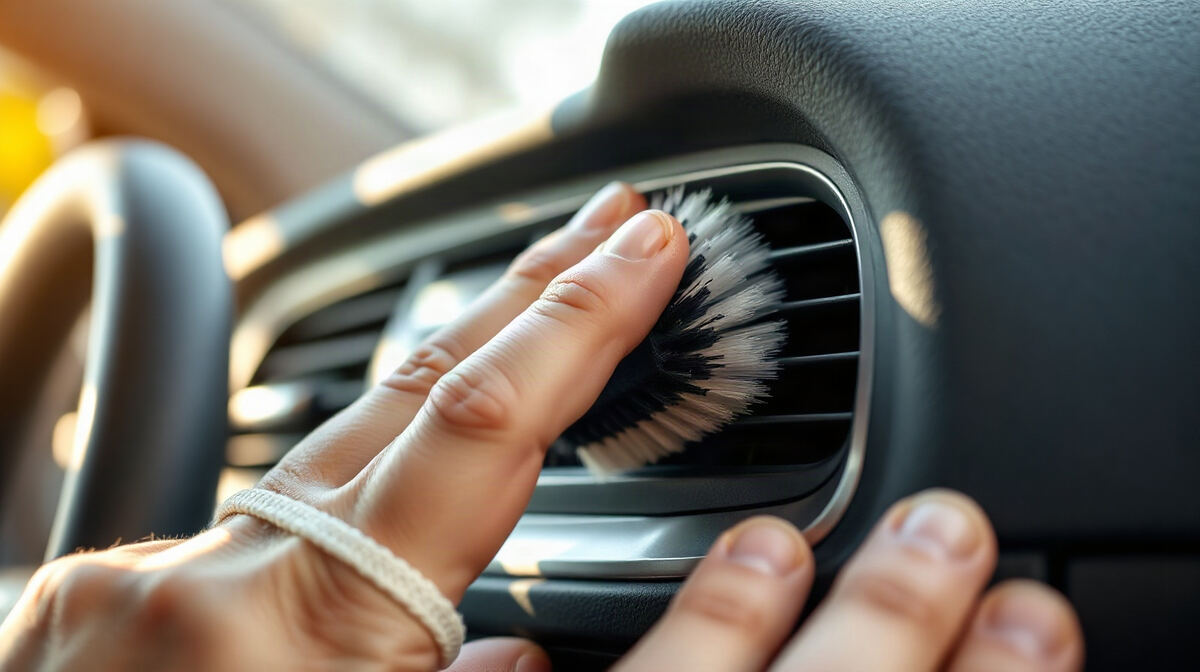
- A soft brush: a leather or upholstery brush, or a soft horsehair detailing brush. Stiff nylon scratches the topcoat.
- Three or four clean microfibre towels: one to wipe off cleaner, one to dry, one for conditioner.
- A vacuum with a soft brush and crevice tool.
- A leather conditioner or protectant suited to coated automotive leather.
How to clean leather car seats, step by step
- Vacuum first. Get into the seams and between the base and backrest. Grit left behind acts like sandpaper when you scrub.
- Test the cleaner on a hidden area, such as the side of the seat base, and check for colour coming off on the towel.
- Spray the cleaner onto the brush, not the seat. This keeps liquid out of stitching and perforations.
- Work one small section at a time with gentle circular strokes until a light foam lifts the dirt. The seat bolster you slide across gets dirtiest, so give it extra passes.
- Wipe straight away with a damp microfibre, then dry with a clean one. Don't let the cleaner dry on the leather.
- Repeat on very dirty areas rather than scrubbing harder.
- Condition or protect once the seats are dry: a thin layer worked in with a microfibre applicator, then buff off any excess so the seat isn't slippery or sticky.
Perforated, light-coloured and older leather
- Perforated or ventilated seats: use the cleaner as a foam on the brush, never sprayed directly, and wipe quickly. Liquid in the holes can reach the foam and the seat heater or fan underneath.
- Cream, grey and white leather: denim dye transfer is common. Clean more often and gently; stubborn blue staining is a job for a detailer.
- Older or cracked leather: cracks mean the topcoat has worn through. Cleaning and conditioning slows it down, but repair needs a leather restorer who can re-colour and re-coat.
- Synthetic leather and vinyl: many newer cars use them. They clean the same way, but don't need conditioner, only a protectant.
What to avoid on leather seats
- Steam cleaners: heat and moisture can damage the topcoat. See the car steam cleaning guide.
- Household wipes, dish soap and all-purpose cleaners: they can strip the finish and leave residue.
- Magic erasers: they are abrasive and wear through the coating.
- Too much conditioner: it leaves seats greasy and attracts dirt.
- Soaking the seat: water in the stitching weakens it and can stain.
How often to clean and condition
For a daily driver, a quick wipe with a damp microfibre every couple of weeks and a proper clean every two to three months keeps leather in good shape. Condition after each proper clean, or more often if the car is parked in the sun. Auckland summers are hard on leather in cars parked outside, and a sunshade helps a lot.
When to get leather seats cleaned professionally
A detailer makes sense for heavy dye transfer, old stains, smells, perforated seats you don't want to risk, or a car you are about to sell. Detailers use dedicated leather cleaners and extraction on the fabric parts of the seats, so the whole interior comes up at once.
Want it done for you? Get a fixed-price quote for interior car cleaning in Auckland, including leather cleaning and conditioning. The full interior cleaning guide covers the rest of the cabin.
Frequently asked questions
What is the best way to clean leather car seats?
Vacuum, then use a pH-balanced leather cleaner sprayed onto a soft brush, work one section at a time, wipe off with a damp microfibre, dry it and finish with a conditioner or protectant.
Can I use soap and water on leather car seats?
A barely damp microfibre with plain water is fine for a quick wipe. Dish soap and household cleaners can strip the protective finish, so use a dedicated leather cleaner for a proper clean.
Do leather car seats need conditioning?
Real leather benefits from conditioning every few months, especially in cars parked in the sun. Synthetic leather and vinyl only need a protectant.
How do I get blue jeans dye off light leather seats?
Light dye transfer usually comes off with a leather cleaner and a soft brush. Old or heavy staining often needs a detailer, because scrubbing harder can wear through the coating.
How do I clean perforated leather seats?
Spray the cleaner onto the brush, not the seat, use light pressure and wipe immediately so no liquid gets into the holes and the fan or heater underneath.
How often should I clean leather car seats?
A light wipe every couple of weeks and a proper clean and condition every two to three months suits most daily drivers.