Before you start
- Pick the right spot. Work in shade, or early morning or evening. Sun dries soap and water onto the paint and leaves spots.
- Check the paint is cool. Put your hand on the bonnet. If it's hot, wait.
- Allow three to five hours for a full inside-and-out detail on an average car. Your first time will be slower.
- Do the interior first or last, not in the middle. Many people vacuum first so the doors aren't opened onto a freshly dried car.
What you'll need
- Two buckets, ideally with grit guards in the bottom
- A pH-neutral car shampoo (not dishwashing liquid)
- A microfibre or lambswool wash mitt
- A wheel cleaner and a separate soft wheel brush
- A large microfibre drying towel
- A spray sealant or quick detailer for protection
- A vacuum, interior cleaner, glass cleaner and a stack of clean microfibre cloths
Not sure what to buy? See our car cleaning kit list.
Step 1: Wheels and tyres first
Wheels are the dirtiest part of the car, so clean them before the paint. That way brake dust and grime don't splash onto panels you've already washed. Spray wheel cleaner on one wheel at a time, agitate with the wheel brush, scrub the tyre wall, then rinse well. Use a separate brush and cloths for wheels and never use them on the paint.
Step 2: Rinse and pre-wash
Rinse the whole car from the top down to knock off loose dirt and grit. If you have a snow foam lance or a pump sprayer, cover the car in foam and let it sit for a few minutes before rinsing. The less grit left on the paint when you touch it, the fewer scratches you'll make.
Step 3: Two-bucket hand wash
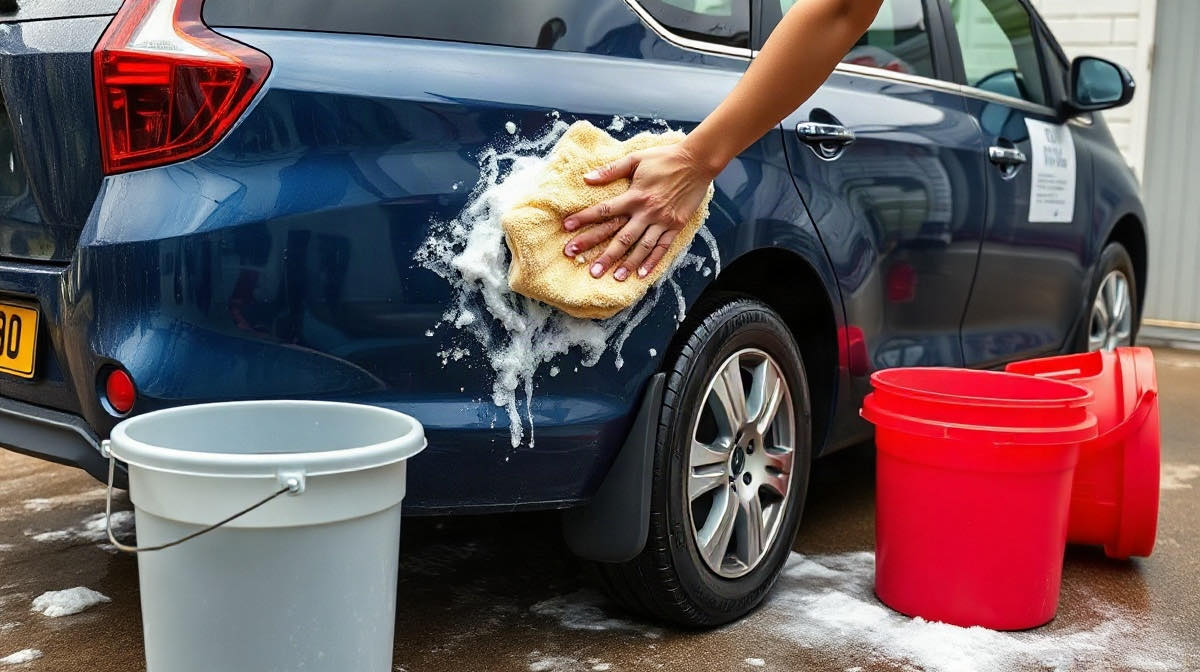
- Fill one bucket with shampoo and water, the other with plain rinse water.
- Wash one panel at a time from the roof down, with straight lines rather than circles.
- Rinse the mitt in the plain water bucket before reloading it with soap. This keeps grit out of your wash water.
- Leave the lower sills, bumpers and behind the wheels until last; they're the dirtiest.
- Rinse the car thoroughly when you're done.
More detail in our guide to washing a car without scratching it.
Step 4: Dry without dragging
Lay a large microfibre drying towel flat on a panel and pat or gently pull it across, rather than scrubbing. Wring it out as it gets heavy. Open the doors, boot and bonnet and wipe the jambs, where water and dirt collect. A leaf blower is handy for mirrors, grilles and badges where water drips out later.
Step 5: Decontaminate (optional, every few months)
Run your fingertips over the clean, dry paint inside a thin plastic sandwich bag. If it feels gritty, the paint has bonded contamination like tree sap, tar or industrial fallout. A clay bar or clay mitt with plenty of lubricant lifts it off and leaves the paint smooth, so protection bonds better. Skip this step for a quick detail.
Step 6: Protect the paint
A wash leaves paint clean but bare. Apply a spray sealant or wax one panel at a time and buff off with a clean microfibre cloth. It adds gloss, makes water bead and run off, and makes the next wash easier. Spray sealants are the easiest option for beginners and typically last weeks to a few months.
Step 7: Glass, trim and tyres
- Glass: one cloth to clean, a second dry cloth to buff. Wind each window down slightly to catch the top edge.
- Plastic trim: a water-based trim dressing restores faded black plastics. Wipe off the excess.
- Tyres: a thin layer of tyre dressing, applied with a pad, not sprayed near the paint. Let it dry before driving so it doesn't fling.
Step 8: The interior
- Take everything out, including the floor mats.
- Dust from the top down: vents, dash, console, door cards.
- Vacuum seats, carpets and the boot, sliding the seats to reach underneath.
- Wipe hard surfaces with interior cleaner sprayed onto a cloth, not onto screens or buttons.
- Clean the mats, let them dry, and put them back last.
For stains, seats and smells, follow our full guide to cleaning your car interior.
Mistakes that cause swirls and damage
- Dishwashing liquid, which strips wax and sealant.
- One bucket and a sponge, which grinds grit into the paint.
- Washing in direct sun, which leaves water spots that can etch.
- Dropping a mitt or towel on the ground and carrying on. Swap it for a clean one.
- Old bath towels or chamois that drag dirt across the paint.
- Using the same brush or cloth for wheels and paint.
When to call a professional
A basic home detail keeps a car clean and protected. It won't remove swirl marks, deep stains, mould smells or cloudy headlights. Those need machine polishing, hot-water extraction and other tools most people don't own. If your car needs a reset before you start maintaining it yourself, a professional detail is a good starting point.
Frequently asked questions
How long does it take to detail a car yourself?
Allow three to five hours for a full inside-and-out detail on an average car. A wash, dry and spray sealant alone takes about an hour to ninety minutes.
What's the difference between washing and detailing a car?
Washing cleans the outside. Detailing is a more thorough process that includes wheels, door jambs, decontamination, paint protection and the interior.
Can I use dishwashing liquid to wash my car?
It's best not to. Dishwashing liquid is made to strip grease, so it also strips wax and sealant and can dry out rubber and plastic trim. Use a pH-neutral car shampoo.
Do I need a pressure washer?
No. A hose and two buckets do the job. A pressure washer and foam lance make the pre-wash faster and safer, but they're a nice-to-have.
More guides
- What is car grooming? What you get and how to choose a groomer
- Mobile car detailing near me: how it works in Auckland
- How to clean your car interior like a pro
- Is ceramic coating worth it? An honest guide for NZ drivers
- Headlight restoration: DIY kit or professional?
- How much does car detailing cost in Auckland?
- What is car detailing? A plain-English guide
- Best ceramic coating in NZ: DIY kit or professional?
- Steam cleaning your car interior: is it worth it?
- How much does ceramic coating cost in NZ?
- Mobile car wash prices in Auckland: what you're paying for
- Paint correction cost: what affects the price
- PPF vs ceramic coating: which does your car need?
- How to wash a car without scratching the paint
- Car cleaning kit: what you actually need, and what to skip
- How often should you detail your car? A simple care schedule