Why washing causes scratches
Road grit is abrasive. Every time a mitt, sponge or brush drags a bit of grit across the paint, it leaves a tiny scratch in the clear coat. One wash won't show it, but over months those scratches build up into the cobweb of swirls you see under sunlight or street lights. Automatic brush washes do the same thing, faster.
The two-bucket method
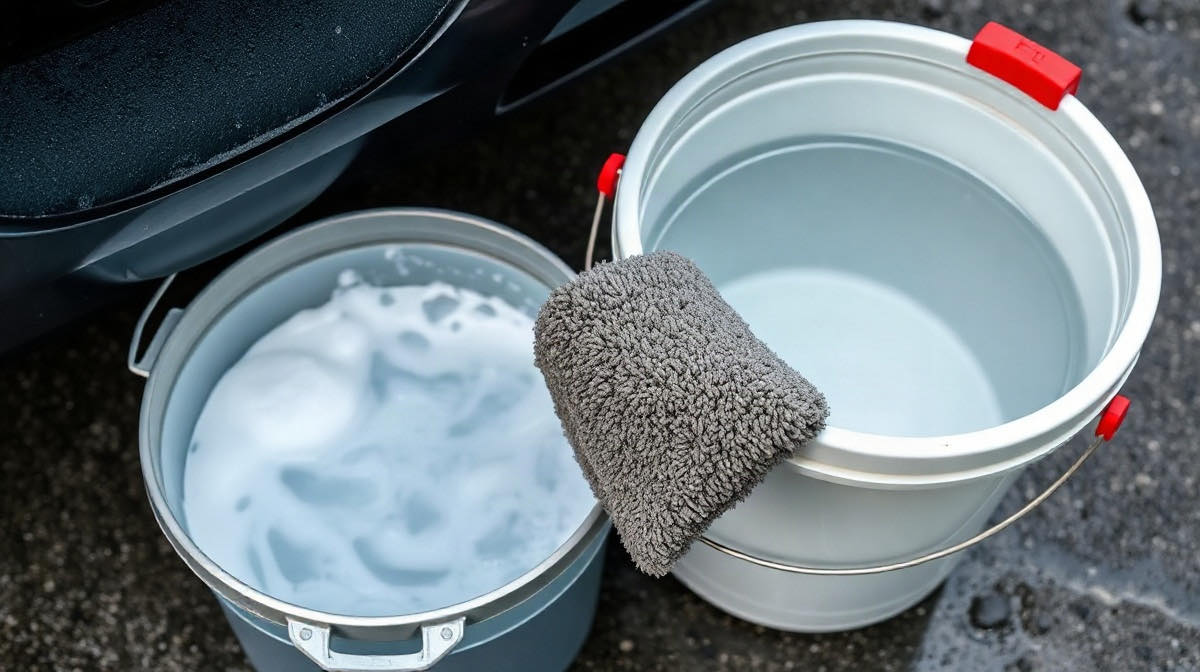
- Wash bucket: water plus a pH-neutral car shampoo.
- Rinse bucket: plain water.
- Dip the mitt in the wash bucket and clean one panel.
- Rub the mitt against the grit guard in the rinse bucket to release dirt.
- Only then go back into the wash bucket for more soap.
A grit guard is a plastic grate that sits in the bottom of the bucket. Dirt falls through and stays there instead of getting back on your mitt. They're cheap and worth it.
Use the right mitt
Choose a deep-pile microfibre or lambswool mitt. The long fibres pull grit away from the surface. Avoid flat sponges, which trap grit against the paint, and avoid brushes on paintwork entirely. If you have more than one mitt, use one for the upper half of the car and another for the dirtier lower sections.
Wash in the right order
- Wheels first, with separate tools, so the dirtiest grime is gone before you touch the paint.
- Rinse thoroughly to remove loose dirt. Pre-wash foam helps if you have it.
- Top down: roof, glass, bonnet and boot, upper doors, then the lower panels and bumpers last.
- Straight lines, light pressure. Let the shampoo do the work.
Dry it safely
Drying is where many scratches happen. Use a large, plush microfibre drying towel and blot or lay-and-pull it across the panel with no pressure. Don't use bath towels, old t-shirts or a dirty chamois. Spraying a drying aid or quick detailer onto the wet panel adds lubrication and reduces friction further.
Look after your microfibre
Dirty or damaged microfibre scratches. Wash your cloths and mitts separately from other laundry, without fabric softener, which clogs the fibres. Air dry or tumble dry on low. Retire any cloth that's gone stiff or was dropped on the ground.
Waterless and rinseless washes
If you live in an apartment or can't use a hose, a rinseless wash (a special shampoo in a single bucket, no rinsing) is a good option for lightly dirty cars. Waterless spray washes suit dust and light grime only. On a muddy car, they're more likely to scratch, so rinse heavy dirt off first.
Frequently asked questions
Are automatic car washes bad for paint?
Brush-type automatic washes are a common cause of swirl marks. Touchless washes are gentler but use stronger chemicals and often leave a film of dirt behind.
How often should I wash my car?
Every one to two weeks for a daily driver. Remove bird droppings, tree sap and bug splatter as soon as you can, as they can etch the paint.
Can swirl marks be removed?
Yes, with machine polishing, also called paint correction. It removes a very thin layer of clear coat to level out the scratches. Light swirls may only need a single polish.
More guides
- What is car grooming? What you get and how to choose a groomer
- Mobile car detailing near me: how it works in Auckland
- How to clean your car interior like a pro
- Is ceramic coating worth it? An honest guide for NZ drivers
- Headlight restoration: DIY kit or professional?
- How much does car detailing cost in Auckland?
- What is car detailing? A plain-English guide
- Best ceramic coating in NZ: DIY kit or professional?
- Steam cleaning your car interior: is it worth it?
- How much does ceramic coating cost in NZ?
- Mobile car wash prices in Auckland: what you're paying for
- Paint correction cost: what affects the price
- PPF vs ceramic coating: which does your car need?
- How to detail a car at home: a basic step-by-step guide
- Car cleaning kit: what you actually need, and what to skip
- How often should you detail your car? A simple care schedule