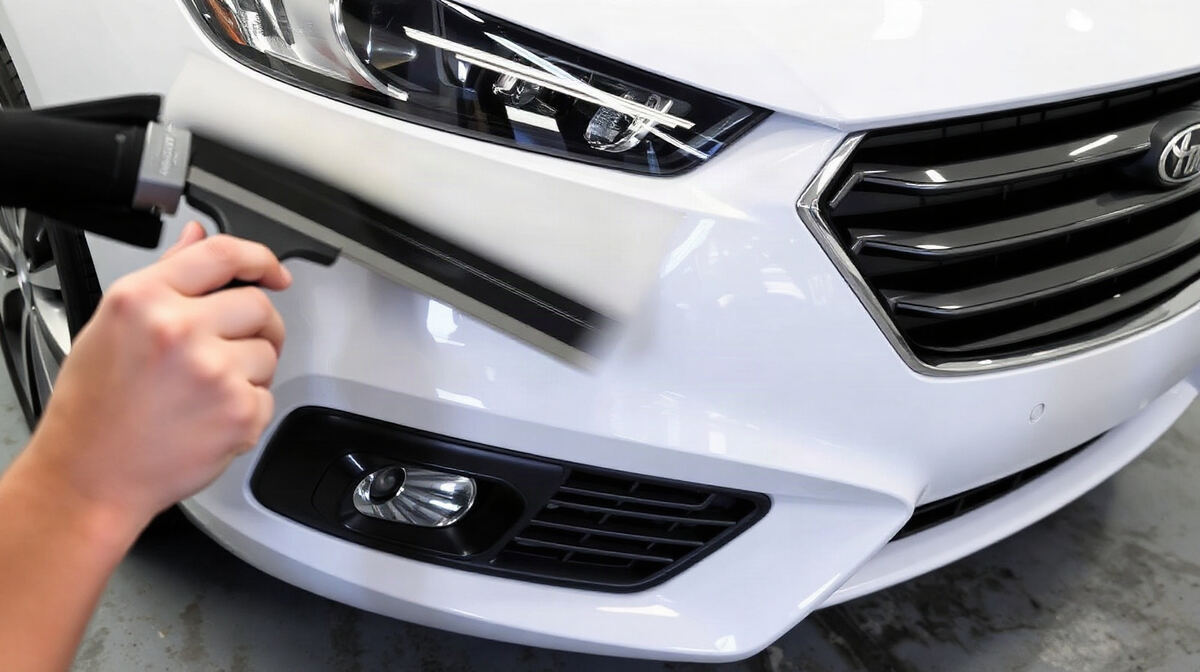
What car touch up paint fixes, and what it doesn't
Touch up paint is for small, localised damage: stone chips on the bonnet and bumper, door edge chips, and short, narrow scratches. Its main job is to seal the damage so moisture cannot reach bare metal and so the edges of the chip do not keep flaking. A careful repair is much less visible from normal viewing distance, but it will rarely be invisible up close.
It is not the right fix for long scratches across a panel, large scuffs, cracked bumpers, rust that has bubbled under the paint, or a bonnet covered in dozens of chips. Those need a panel and paint shop.
How to find your paint code
Colour names like "silver" are useless for matching; every manufacturer has dozens of silvers. You need the paint code, a short combination of letters and numbers.
- Supercheap Auto notes the code is usually found next to the compliance plate, often in the engine bay, on the firewall or inside the door jambs, and sometimes in the front of the owner's manual.
- Many Japanese and Korean cars have a label on the driver's door pillar or jamb marked "Color" or "C/TR".
- Some European makes use a different spot. Polestar's NZ owner's manual, for example, places the paint colour code on a label on the right-hand door pillar, between the front and rear doors.
If you cannot find it, a franchise dealer for your make can usually look up the code from the VIN. Japanese imports may carry a model plate in the engine bay with the colour code on it rather than a door label.
Pens vs bottles vs aerosols
| Format | Best for | Pros | Cons |
|---|---|---|---|
| Touch up pen | Tiny chips, door edges | Clean, easy to carry, no brush to clean | Tip can lay too much paint; limited colour range off the shelf |
| Brush-in-cap bottle (around 50ml) | Stone chips, short scratches | Can be mixed to your exact code; best control with a fine brush or toothpick | Supplied brush is often too big for small chips |
| Aerosol (around 300g) | Larger scuffs, small parts, bumper corners | Even coat over a wider area | Needs masking, blending and good technique; overspray risk |
| Spray gun paint (tins) | Panel repairs | Professional finish | Needs spray equipment and skill; really a panel shop job |
Most modern cars use a two-stage finish: a coloured basecoat with a clear coat on top. A touch up kit for these cars should include both, or you need to buy clear separately. Pearl and three-coat colours are the hardest to match by hand.
Where to buy colour-matched touch up paint in NZ
- Supercheap Auto offers a paint mixing service in its stores. Take in your paint code and staff can mix it into a 50ml touch up bottle, a 300g aerosol or larger tins for spray equipment. Online orders for basecoat are limited to the 50ml and 300g sizes, and staff contact you to confirm the code before collection. Pricing is a base fee plus paint and container, as set out in the store's service price list at the time of writing (November 2026).
- Repco sells Dupli-Color colour-matched scratch fix touch up pens in popular manufacturer colours, plus aerosols. Phone the store with your paint code to check a match.
- Franchise dealers can order genuine manufacturer touch up paint for your code, which is useful for newer cars.
- Automotive paint suppliers that serve panel shops can mix to code and often supply primer and clear to suit.
A code gives the factory colour, but your car's paint may have faded. Supercheap Auto warns that an exact match is hard to guarantee on older or faded paint and suggests bringing the vehicle in so staff can compare it against a swatch. Test the colour on a hidden area, such as inside the fuel flap, before you touch the chip.
How to fix a stone chip, step by step
This sequence follows the method in Polestar's NZ owner's manual on touching up paintwork damage, which applies to most two-stage paint. Always follow the drying times on your own product.
- Check the conditions. The surface should be clean, dry and at least 15 degrees Celsius. Cold paint will not flow or dry properly, so pick a warm day or work in a garage.
- Clean the chip. Wash the area, then wipe with a wax and grease remover or isopropyl alcohol. Wax left on the paint stops new paint sticking.
- Remove loose paint. Press masking tape over the chip and pull it off to lift any flakes. Use a fine brush or the tip of a blade to clear rust specks.
- Prime bare metal. If the chip is down to metal, apply a little primer with a fine brush or matchstick, keeping it inside the chip. On plastic bumpers, use an adhesion promoter or plastic primer. If only the clear and some colour are gone and there is still paint at the bottom, you can skip primer.
- Build the basecoat in thin layers. Shake or stir the colour thoroughly. Dab tiny amounts into the centre of the chip with a fine brush or toothpick and let it flow to the edges. Let each layer dry before adding the next, until the colour sits just below the surrounding surface.
- Apply clear coat. Once the base is dry, add clear in one or two thin layers so the repair finishes level with or very slightly above the surrounding paint.
- Let it cure. Leave it for the time on the label before washing. Do not machine polish or wax the area until the paint has fully cured.
- Optional levelling. Experienced DIYers sometimes level a raised repair with a levelling solution or very fine abrasive, then polish. This is where most repairs go wrong, so skip it unless you have practised on a scrap panel.
For scratches, use the same steps and mask around the damage to protect the undamaged paint.
Common touch up mistakes
- Using the cap brush on a small chip. It deposits a blob far wider than the chip. Use a fine artist's brush or a toothpick.
- One thick coat. Thick paint shrinks, wrinkles and leaves a crater or a bump. Thin layers dry flatter.
- Skipping the clear. Basecoat alone dries flat and dull and is not UV resistant.
- Painting over rust. Rust keeps spreading under the new paint. Remove it, or have it treated properly.
- Working in the cold or sun. Paint on a cold panel stays soft; on a hot panel it skins over before it levels.
- Touching sensor areas. Polestar's manual warns not to repaint the cover in front of the front radar. Check your manual before painting near radar, camera or parking sensors.
When a chip needs a panel shop
Take the car to a panel and paint repairer, not a touch up pen, when you see:
- Rust bubbling under the surrounding paint, which means corrosion has spread beyond the chip.
- A scratch or scrape longer than a few centimetres, or one crossing a panel join.
- Cracked, split or deformed plastic, including bumpers.
- Paint peeling or lifting around the chip, which suggests adhesion has failed more widely.
- A heavily chipped bonnet or front bumper, where a respray is cleaner than dozens of dots.
- Damage on a lease or near-new car, where an invisible repair matters at return or trade-in.
Prevention is cheaper than repair. If your commute involves motorway driving or gravel roads, paint protection film on the bonnet and bumper absorbs stone impacts before they reach the paint. The PPF vs ceramic coating guide explains which protection suits which risk.
When to use a professional
Detailers are not panel beaters, so they do not respray panels. What they can do is make touch up work look better. After your chips are filled and cured, a detailer offering paint correction in Auckland can carefully level and polish the repairs, remove the swirls and scratches around them, and then protect the paint. If you plan to do that part yourself, read the car polisher guide first and finish with a layer of car wax once the paint has cured.
Frequently asked questions
Where is the paint code on my car?
Look for a label or plate on the driver's door jamb or pillar, in the engine bay near the compliance plate, or on the firewall. It is sometimes printed in the owner's manual. A dealer for your make can also find it from the VIN.
Can I get touch up paint mixed to my exact colour in NZ?
Yes. Supercheap Auto stores offer paint mixing from your paint code into a 50ml touch up bottle, a 300g aerosol or larger tins. Franchise dealers and automotive paint suppliers can also supply paint to code.
Do I need primer for a stone chip?
Only if the chip has gone down to bare metal or plastic. If there is still paint at the bottom of the chip, you can go straight to basecoat and clear after cleaning.
Do I need clear coat over touch up paint?
On most modern cars, yes. They use a basecoat and clear coat system, and the basecoat alone dries dull and is not UV resistant.
Why doesn't my touch up paint match?
The code gives the factory colour, but paint fades with sun exposure, and metallic and pearl colours look different depending on how they are applied. Test on a hidden area first, and ask the paint mixer to compare against your car if it is older.
How long should touch up paint dry before washing or waxing?
Follow the times on your product label. Let the paint cure fully before washing, and wait longer before machine polishing or waxing the repaired area.