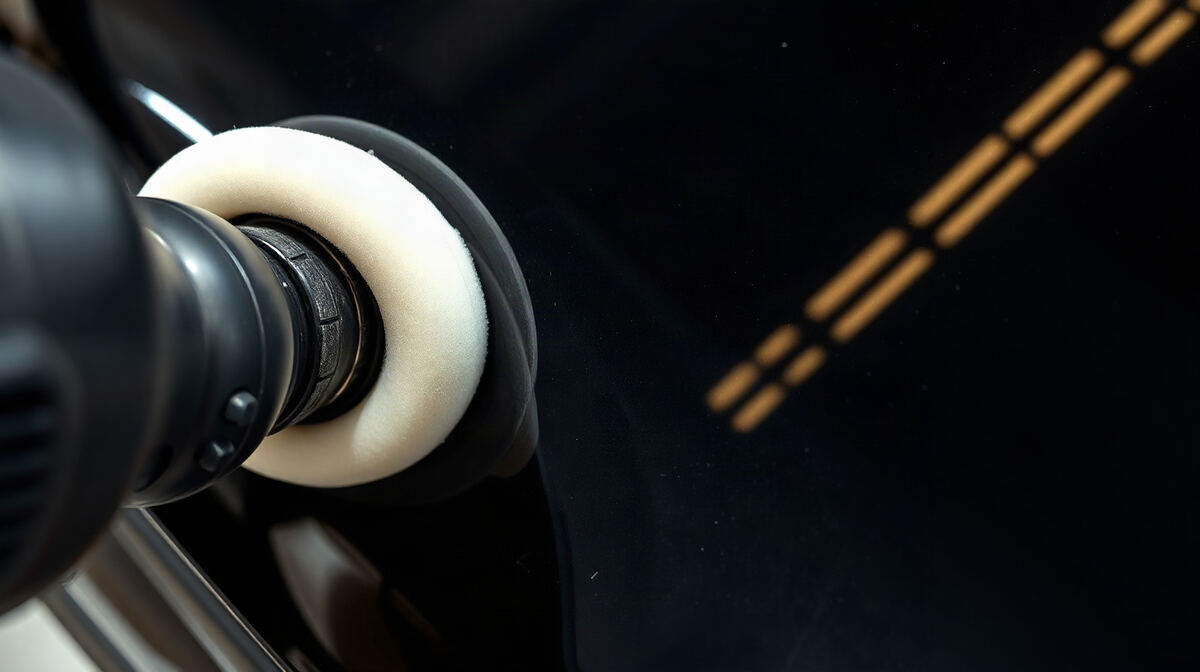
Which car polisher should you buy?
Buy a dual-action (random orbital) polisher with variable speed. The pad spins and also moves in an offset orbit, so heat and cutting power are spread out and the pad slows down if you press too hard. That built-in limit is what makes a DA forgiving for a first-time user.
A rotary polisher cuts faster, but it needs real skill. Polishing tool maker RUPES describes rotary motion as the most invasive movement on the surface, with friction and heat that can cause burns, strike-throughs and swirl marks if misused, and calls random orbital the best compromise between effectiveness and finish quality. Rotaries are mainly a tool for experienced detailers and panel shops doing heavy correction or sanding-mark removal.
Dual-action vs rotary vs forced-rotation polishers
There are three main machine types. The differences come down to how the pad moves.
| Type | How the pad moves | Cutting power | Risk to paint | Best for |
|---|---|---|---|---|
| Rotary | Spins on a fixed axis | Highest | High: concentrated heat, easy to burn edges and leave holograms | Experienced users, heavy defects, wet-sanding marks |
| Dual-action (free spinning) | Orbits on an offset, pad rotation is free and slows under pressure | Moderate | Low | Beginners, swirl removal, applying wax and sealant |
| Forced-rotation (gear-driven DA) | Orbits and is geared to keep rotating | Between DA and rotary | Moderate | Enthusiasts who want more cut without a rotary |
A free-spinning DA tells you when you are pressing too hard because the pad stops turning. A forced-rotation machine keeps the pad turning no matter what, so it cuts harder and also builds more heat. Treat it as a step up, not a starter tool.
Orbit size and pad size explained
On a DA, the orbit (also called throw or stroke) is how far the pad's centre moves off the spindle. A bigger orbit covers more paint per pass and corrects faster on flat panels. A smaller orbit is easier to control on curves, pillars and narrow sections.
- 8mm: the common size on entry and mid-range DAs. Ryobi's 18V ONE+ 125mm polisher, for example, is listed with an 8mm orbit and 3,000 to 7,500 OPM.
- 12mm: RUPES uses this on its smaller machines aimed at edges, spot repairs and tight shapes.
- 15mm: a long-throw size. The RUPES LHR15 ES pairs it with a 125mm pad for curved surfaces.
- 21mm: the largest common throw. RUPES pairs it with a 150mm pad for large flat areas such as bonnets, roofs and doors.
Long-throw machines can stall on tight curves, so they are not automatically better. For one car in a home garage, an 8mm to 15mm DA with a 125mm or 150mm backing plate covers nearly every panel. A small 75mm pad is a useful second size for mirrors, bumpers and pillars.
Pads, compounds and polishes: what to pair
The machine is only one part of the result. The pad and liquid you pair with it decide how much paint is removed.
- Compound: a more abrasive liquid for heavier swirls, light scratches and oxidation. Use it on a firmer foam cutting pad or a microfibre cutting pad.
- Polish: finer abrasives that remove the haze a compound leaves and refine gloss. Use it on a medium polishing pad.
- Finishing pad: a soft foam pad for applying wax, sealant or a glaze with no correction.
- Wool pads: fast cutting, mostly used on rotaries. They leave a finish that needs polishing afterwards.
Always start with the least aggressive combination that fixes the problem. Meguiar's paint correction guide for its MT300 dual-action polisher follows that order: polish at 4,800 OPM on a yellow foam polishing disc for paint with light swirls, and wax at 3,800 OPM with light pressure on a black foam finishing disc. Compound and a cutting pad only come in for neglected paint.
Once the paint is corrected, it needs protection. See the car wax guide or the ceramic coating guide for the next step.
Corded vs cordless polishers
Corded machines deliver steady power for a full day of correction and cost less for the same performance. The cord can drag across paint, so drape it over your shoulder.
Cordless machines are easier to move around the car and there is no cord to catch a panel. The trade-offs are battery runtime and weight. A full two-step polish on a large SUV can use several batteries, so buy a cordless tool on a platform you already own, or budget for spare batteries.
Check the speed range either way. A machine that tops out low will apply wax well but will struggle to correct anything.
Car polishers sold in NZ
Prices below are as listed at the time of writing (November 2026). Check the retailer before buying, as prices and stock change often.
- Supercheap Auto lists the ToolPRO 150mm 720W corded dual-action polisher at $159.99, with variable speed up to 5,000 RPM and soft start. It also stocks a ToolPRO 18V brushless 150mm DA kit and its own SCA polishers.
- Bunnings NZ lists the Ryobi 18V ONE+ 150mm random orbital buffer/polisher (tool only) at $135. It runs from 3,000 to 4,600 opm and comes with wool and microfibre bonnets.
- Specialist detailing suppliers stock enthusiast and professional brands such as RUPES, which publishes orbit and pad sizes for each model.
How to choose: a cheap bonnet-style buffer is fine for spreading and removing wax. For swirl removal, look for a true DA with variable speed, a standard backing plate thread so you can fit proper foam pads, and a speed range that reaches at least the mid-4,000s.
What else you need besides the machine
Budget for the kit around the polisher, not just the tool. A basic DIY setup includes:
- At least two cutting or polishing pads and two finishing pads per pad size, so you can swap to a clean pad when one loads up with residue
- A compound, a finishing polish and a wax or sealant
- A clay bar or clay mitt and lubricant
- Low-tack masking tape for trim and badges
- Six or more clean microfibre towels kept only for polish removal
- A strong LED inspection light, as swirls are hard to see in shade or overcast light
- Eye protection, and hearing protection for long sessions
A pad cleaning brush or compressed air keeps pads cutting evenly during a session. Wash pads in warm water with a pad cleaner afterwards and let them air dry face down.
How to use a car polisher safely, step by step
- Wash and decontaminate. Polishing grit and dirt into the paint creates new scratches. Follow a safe wash method, then clay any paint that feels rough.
- Work in shade on a cool panel. Heat makes liquids dry out and dust too fast.
- Tape off trim, rubber and badges. Polish stains textured plastic and the pad can catch emblems.
- Do a test spot. Try your least aggressive pad and polish on a small section and check under a strong light before doing the whole car.
- Prime the pad. Spread three or four pea-sized drops on the pad and dab it over the section before switching on, so the liquid does not sling.
- Work small sections. Meguiar's recommends a section of about 60cm by 60cm with two to three overlapping passes for polishing, without letting the product dry.
- Keep the pad flat and moving. Use slow, overlapping passes and steady, moderate pressure. Tilting the pad onto its edge concentrates heat and pressure in one spot.
- Wipe and inspect. Remove residue with a clean microfibre towel and check the result before moving on.
- Protect the paint. Finish with wax, sealant or a coating.
Mistakes that burn through clear coat
Factory clear coat is thin, and once it is gone the only fix is a respray. These are the common causes:
- Polishing edges and body lines. Paint is thinnest on sharp creases and panel edges. Stay a finger's width away, or use a small pad on low speed with very light pressure.
- Using a rotary like a DA. A rotary held still, or tilted on its edge, heats paint fast. This is the classic cause of strike-through.
- Starting too aggressive. Compound and a cutting pad on paint that only needed polish removes clear coat for nothing.
- Chasing every defect. Deep scratches that catch a fingernail are often through the clear coat already. Polishing harder will not fix them.
- Repeated corrections. Every polish removes a little paint. Professionals measure paint thickness with a gauge before and during correction for this reason.
- Working dry or dirty. A dry pad builds heat, and a dirty pad scratches. Clean pads often with a brush or compressed air.
When to use a professional
A DA polisher is great for light swirls and maintenance. Paint with deep scratches, heavy oxidation, a recent respray, very soft clear coat or a high-value finish is a different job. Detailers who offer paint correction in Auckland use paint depth gauges, inspection lighting and multi-stage processes to decide how much can safely be removed. Read what paint correction costs to compare that with buying a machine, pads and liquids yourself.
Frequently asked questions
Is a dual-action polisher safe for beginners?
Yes. A free-spinning dual-action polisher is the safest machine type because the pad orbits and slows down under too much pressure, which limits heat. You can still cause damage on edges or by using too aggressive a pad, so start with a polish on a test spot.
What orbit size is best for a car polisher?
For one car at home, a DA with an 8mm to 15mm orbit and a 125mm or 150mm pad suits nearly every panel. Larger 21mm throws work faster on big flat panels but can stall on curves.
Can I use a cheap buffer to remove swirl marks?
Usually not well. Low-speed bonnet-style buffers are designed to apply and remove wax. Removing swirls needs a variable-speed DA, a foam or microfibre pad and a compound or polish.
What is the difference between compound and polish?
Compound uses coarser abrasives to remove heavier defects. Polish uses finer abrasives to remove the haze a compound leaves and bring up gloss. Many cars only need polish.
Should I use a rotary polisher on my car?
Only if you have been trained on one. Rotaries cut fastest but concentrate heat and can burn through clear coat or leave holograms. A DA is the better choice for home use.
Do I need to wax after polishing?
Yes. Polishing removes old protection and leaves bare clear coat. Apply a wax, sealant or ceramic coating afterwards to protect the finish.