What car wax does and which type to choose
Car wax sits on top of your clear coat and takes the wear that would otherwise hit the paint: UV, rain, bird droppings, tree sap and road film. It also fills very fine marks slightly and makes the surface slick, so dirt washes off more easily.
For most daily drivers, a synthetic sealant or hybrid ceramic wax is the practical choice because it lasts longer per application. Choose carnauba if you enjoy waxing and want maximum depth on a dark or classic car. Use a spray wax as a quick top-up between full applications.
The main types of car wax
| Type | What it is | Look | Durability | Effort |
|---|---|---|---|---|
| Carnauba paste or liquid | Natural wax from Brazilian palm leaves, blended with oils and solvents | Warm, deep gloss | Shortest | Apply, haze, buff |
| Synthetic sealant (polymer wax) | Man-made polymers that bond to the paint | Sharp, glassy shine | Longer than carnauba | Apply, haze, buff |
| Spray wax | Diluted wax or polymer in a trigger bottle | Quick gloss boost | Short | Spray and wipe |
| Hybrid ceramic wax | Wax or polymer blended with silica (SiO2) | Slick, strong water beading | Longest of the waxes | Spray on, wipe or rinse |
| Cleaner wax (all-in-one) | Light abrasives or cleaners plus wax | Improves dull paint | Short to medium | Apply, buff |
Many retail waxes are blends. Meguiar's Ultimate Wash and Wax, for example, combines carnauba with synthetic polymers, so read the label rather than relying on the name.
How long each type of car wax lasts
No wax has a fixed lifespan. Durability depends on how the car is stored, how often and how it is washed, the climate and how well the paint was prepared. US car care brand Griot's Garage makes the same point, calling durability claims always questionable, and gives average applications per year for its own range instead:
- Ceramic 3-in-1 Wax: 1 to 2 applications a year
- Best of Show Wax and Liquid Wax 3-in-1: 3 to 4 a year
- Best of Show Spray Wax: 5 to 6 a year
- Foaming wash-on gloss products: after every wash
The same pattern holds across brands: carnauba needs topping up most often, synthetic and ceramic-infused products the least. The simplest test is water behaviour. When rain or a hose stops forming tight beads and starts sheeting slowly or sitting flat on the paint, it is time to reapply.
How to apply car wax properly
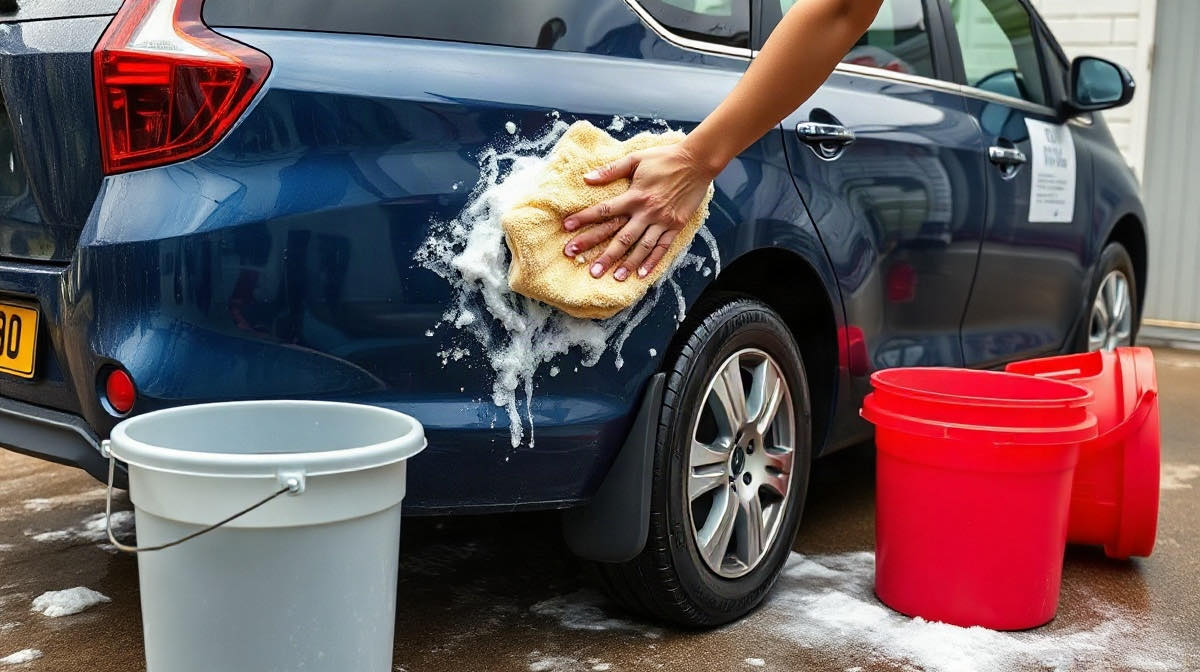
- Wash and dry the car using a two-bucket method. Wax applied over grit will scratch.
- Decontaminate if needed. If the paint feels rough after washing, use a clay bar so the wax bonds to clean paint.
- Polish first if the paint is swirled. Wax hides very little. Machine polishing is covered in the car polisher guide.
- Work in shade on a cool panel. Wax applied to hot paint dries too fast and smears.
- Apply thin. Use a foam applicator or a DA polisher on a soft finishing pad. Meguiar's MT300 guide applies wax at a low 3,800 OPM with light pressure, two overlapping passes, in a thin uniform coat. A thick coat does not add protection, it only makes removal harder.
- Let it haze according to the label. A swipe test with a finger should come away clean, not smeared.
- Buff off with a clean, plush microfibre towel, flipping to a fresh face often.
- Keep wax off textured plastic and rubber, where it dries white.
Spray-on hybrid ceramic waxes are different. Meguiar's Hybrid Ceramic Wax label directs you to spray two to three light mists per panel onto the wet, freshly rinsed car, then rinse or dry with a microfibre drying towel. Over-application causes streaks, so less is more.
Wax vs sealant vs ceramic coating
| Car wax | Paint sealant | Ceramic coating | |
|---|---|---|---|
| Who applies it | DIY | DIY or detailer | Usually a professional |
| Paint prep needed | Wash, ideally clay | Wash, clay, ideally polish | Full decontamination and paint correction |
| Reapplication | Most often | Less often | Years, with maintenance |
| Up-front cost | Lowest | Low | Highest |
| Chemical resistance | Low | Moderate | Highest |
A ceramic coating forms a hard, semi-permanent layer and is a different category of product from even the best hybrid ceramic wax. It costs more because of the paint correction and labour involved. The ceramic coating guide covers the trade-offs in detail. If stone chips are the concern, no wax or coating will stop them; that is what paint protection film is for.
Car wax in New Zealand conditions
New Zealand's sun is harder on paint than many places where car wax brands are developed. The Ministry for the Environment reports that peak summer UV levels here are roughly 40 percent higher than at comparable latitudes in the Northern Hemisphere, because of the earth's orbit, thinner summer ozone and clean air. NIWA puts typical summer midday UV Index values in Auckland at around 12 to 13, dropping to around 3 in winter.
What that means for wax:
- Shorten your intervals in summer. Heat and UV break wax down faster. Check water beading monthly from November to March.
- Wax before summer rather than after. Spring is the best time for a full decontamination and a fresh layer.
- Never apply in direct sun. On a summer afternoon, dark paint gets far too hot to work. Wax early morning or in a garage.
- Coastal and street parking exposes paint to salt air, bird droppings and tree sap. Remove droppings quickly, as they can etch the clear coat within days in summer heat.
How to make car wax last longer
Most wax is lost to washing, not weather. A few habits stretch every application:
- Use a pH-neutral car shampoo. Strong degreasers, dishwashing liquid and some traffic film removers strip wax in one wash.
- Avoid brush-type automatic washes. The brushes abrade the protective layer and add swirls that the next wax will not hide.
- Top up with a spray wax or sealant after every second or third wash. It is quicker than a full application and keeps the base layer from wearing through.
- Park under cover when you can. A garage or carport cuts UV exposure, sap and droppings more than any product.
- Layer compatible products. A carnauba over a cured synthetic sealant gives the look of carnauba with the life of the sealant. Applying a sealant over carnauba usually does not bond well, so go sealant first.
- Dry with a clean microfibre towel rather than a chamois or squeegee, which can drag grit across the paint.
For a full routine that fits waxing into regular washes, see how often you should detail your car.
Car wax sold in NZ and how to choose
At the time of writing (November 2026), Mitre 10 lists Meguiar's Carnauba Wax 473ml at $31.98, and Supercheap Auto lists Meguiar's Deep Crystal Carnauba Wax 473ml at $43.99. Repco, Supercheap Auto and Mitre 10 all carry liquid, paste, spray and hybrid ceramic waxes from brands such as Meguiar's, Turtle Wax and their own house brands.
Instead of chasing a "best" product, choose on these points:
- Time: if you will only wax twice a year, choose a sealant or hybrid ceramic wax.
- Paint condition: dull or oxidised paint benefits from a cleaner wax or a polish first.
- Existing coating: if your car is ceramic coated, use the coating maker's topper, not a carnauba that can mask its water behaviour.
- Black trim: pick a product labelled safe on plastics, or mask trim before applying.
When to use a professional
Waxing is an easy DIY job on paint that is already in good shape. A detailer is worth it when the paint needs decontamination and polishing before protection, when you want a sealant applied after a proper machine polish, or when you simply do not have the time or shade to do it right. Many car grooming services in Auckland include a wax or sealant as part of a full groom, and detailers can quote for a ceramic coating if you want protection that lasts years rather than months.
Frequently asked questions
How often should I wax my car in NZ?
It depends on the product. As a guide, carnauba waxes need reapplying every few months, synthetic sealants and hybrid ceramic waxes less often. Reapply when water stops beading tightly, and check more often in summer when UV is strongest.
Is carnauba or synthetic wax better?
Carnauba gives a warm, deep look but wears off faster. Synthetic sealants and ceramic-infused waxes last longer and suit daily drivers. Many products blend both.
Can I wax my car in the sun?
Avoid it. Wax on hot paint dries too fast, smears and is hard to buff off. Work in shade or a garage on a panel that is cool to the touch.
Does wax remove scratches?
No. Wax can hide very fine marks slightly but does not remove them. Swirls and scratches need polishing with a compound or polish before waxing.
Can I put wax on a ceramic coated car?
You can, but it often hides the coating's own water behaviour. Most coating makers sell a matching spray topper for maintenance, which is the better choice.
Should I wax a brand new car?
Yes, unless it has been ceramic coated or the dealer applied a paint protection product, in which case use the maintenance product recommended for that coating. New paint has no wax from the factory, and cars often pick up swirls and contamination during transport and pre-delivery cleaning, so a gentle polish before the first wax can be worth checking for.
Is hybrid ceramic wax the same as a ceramic coating?
No. Hybrid ceramic wax is a wax or polymer with added silica that you top up regularly. A ceramic coating is a harder, semi-permanent layer applied after paint correction and lasts years.