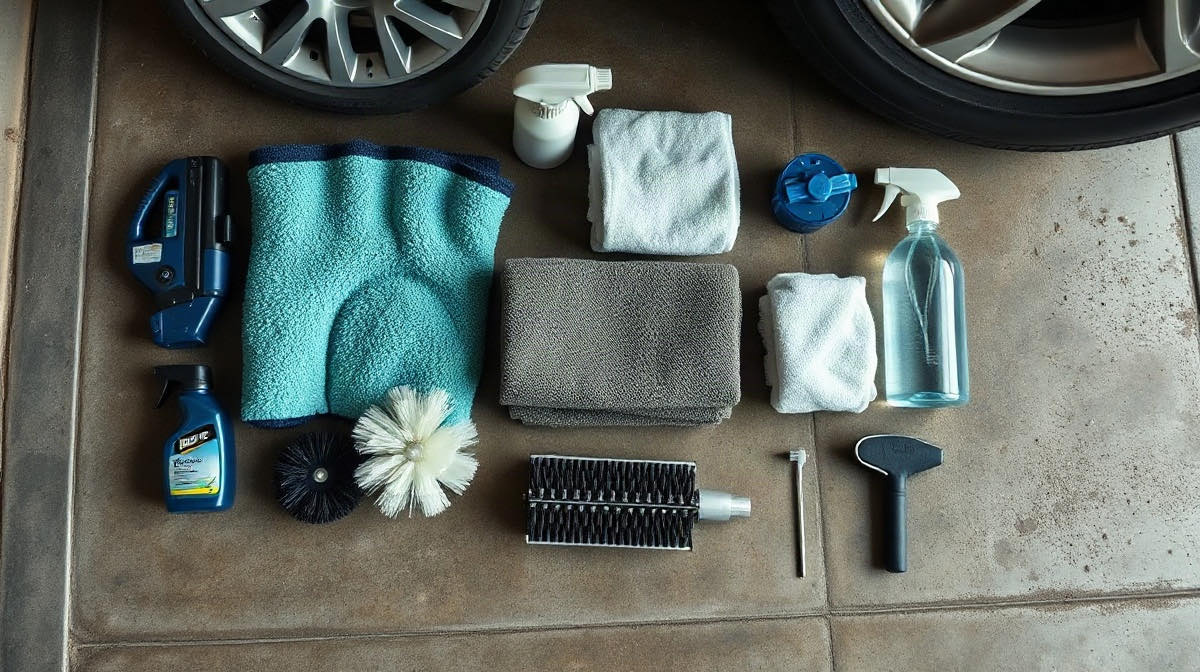
Car wash kit vs car cleaning kit vs car detailing kit
The three names overlap, but they describe three levels of kit.
| Kit | What it covers | Core contents |
|---|---|---|
| Car wash kit | Exterior washing and drying | Buckets, grit guards, shampoo, wash mitt, drying towel, wheel cleaner and brush |
| Car cleaning kit | Inside and out | The wash kit, plus vacuum attachments, interior cleaner, detailing brush, glass cleaner and microfibre cloths |
| Car detailing kit | Cleaning plus paint care | The cleaning kit, plus iron remover, clay bar, polish, and a wax, sealant or coating |
Most people should start with a solid wash kit and a few interior basics, then add detailing products once washing is a habit. A beginner with ten good items gets better results than one with a 30-piece box of sprays.
The car wash kit: a starter list with reasons
- Two buckets, each with a grit guard. One holds shampoo, one holds rinse water. The guard keeps the grit you rinse out of the mitt at the bottom of the bucket, so it doesn't go back onto the paint. This is the single cheapest way to cut swirl marks.
- pH-neutral car shampoo. Cleans without stripping wax or sealant. Look for "pH neutral" or "pH balanced" on the label, and skip wash-and-wax blends if your car is coated.
- A microfibre or chenille wash mitt. Deep pile lifts grit away from the paint. Two mitts are better: one for the upper panels, one for the dirtier sills and bumpers.
- A large microfibre drying towel. One big, plush towel dries a car with less rubbing than a stack of small cloths. Pat or drag gently; don't scrub.
- Wheel cleaner and a soft wheel brush. Wheels carry brake dust, the grittiest dirt on the car. Use separate tools for wheels and never let them touch the paint.
- A spray sealant or quick detailer. Adds gloss and a few weeks of protection after each wash, and is the easiest protection a beginner can apply well.
- A hose with a trigger nozzle. Lets you rinse panel by panel and stop the flow between, which saves water and gives you control. A trigger nozzle is also what Watercare restriction stages have required for hose use in past droughts.
Things that don't need to be expensive: buckets, grit guards and basic wheel brushes. Things worth spending a little more on: the wash mitt and the drying towel, because they touch the paint every time.
The full method that ties these together is in the guide to washing a car without scratching.
Add these for a full car cleaning kit (interior)
- A vacuum with crevice and brush tools. A cordless handheld covers weekly upkeep; a corded wet-and-dry vacuum is better for a deep clean.
- An interior cleaner made for car plastics and vinyl. Household sprays can be too strong for dash plastics and screens. Many interior products also add UV protection, which matters in NZ sun.
- A soft detailing brush. Reaches vents, seams, buttons and stitching. Soft synthetic bristles or boar hair are gentle enough for piano-black trim and screens.
- A tint-safe glass cleaner. Ammonia-free formulas are the usual recommendation for tinted windows. See the car window cleaner guide for streak-free technique.
- A fabric or leather cleaner, depending on your seats. Leather also benefits from a conditioner. Test any new product on a hidden spot first.
- A pack of general-purpose microfibre cloths, in a different colour from your paint towels, so interior and exterior cloths never mix.
For the order of work inside the car, see how to clean a car interior.
Add these for a car detailing kit
- Iron remover. Dissolves embedded brake dust on paint and wheels; it usually turns purple as it works. Use it a few times a year, or before claying.
- Clay bar or clay mitt, with lubricant. Pulls bonded contamination out of the clear coat so paint feels smooth. Needed before polishing or applying a coating. Always use plenty of lubricant, and discard clay that's been dropped.
- Snow foam and a foam cannon or hose gun. A pre-wash that loosens grit before you touch the paint. See the guide to car cleaning foam.
- Polish and applicator pads. Hand polish can improve gloss and remove very light marks. Real swirl removal needs a machine; the car polisher guide explains dual-action machines for beginners.
- Longer-lasting protection. A paste or liquid car wax, a sealant, or a DIY ceramic coating for enthusiasts with a garage.
- Tyre dressing and trim restorer. Brings faded black plastics and tyres back to a deep, even finish.
- A blower or car dryer. Blows water out of mirrors, grilles and wheels so it doesn't drip and streak.
What to buy first: if you're upgrading a wash kit, iron remover and clay give the most visible change for the money, because smooth, decontaminated paint takes protection better and feels noticeably slicker. Snow foam comes next if you already own a pressure washer. Leave polishing until you've practised on an old panel or watched a professional, and treat a DIY coating as the final step once everything else is routine.
How to use the kit: a simple wash order
The order you work in matters as much as the products, because it stops you dragging dirt from the dirtiest parts of the car onto the cleanest.
- Wheels and tyres first, with their own bucket or brush, so brake dust doesn't splash onto clean paint later.
- Rinse the whole car from the top down, or snow foam it if you have the gear, to shift loose grit.
- Wash top to bottom with the two-bucket method: roof, glass, bonnet and boot, upper sides, then the lower sills and bumpers last. Rinse the mitt in the clean bucket after every panel.
- Rinse again and dry straight away with the large drying towel, working in the shade so water doesn't spot.
- Protect with the spray sealant, one panel at a time, buffing off with a clean cloth.
- Glass and interior last, with separate cloths, so nothing from the exterior ends up on the dash.
Wash in the shade, on cool panels, and on the lawn or gravel where you can, so runoff soaks into the ground instead of reaching the stormwater drain. A full wash with this kit takes about an hour once you know the routine.
What to skip
- Dishwashing liquid as shampoo. It's designed to cut grease and strips wax and sealant.
- Sponges and old bath towels. Their flat surfaces trap grit against the paint and cause scratches.
- Household multi-surface sprays on the dash and screens. Some can dry out or discolour plastics and damage screen coatings.
- Tyre shine that slings. Wet, oily dressings fling onto paint when you drive. Choose a water-based dressing and wipe off the excess.
- "Miracle" all-in-one products that claim to clean, polish and coat in one wipe. They're convenient, but each job is done less well than with separate products.
- A rotary polisher as a first machine. Rotaries correct fast but can burn through clear coat on edges in seconds. A dual-action polisher is the safer start.
- Big boxed kits padded with air fresheners and gimmicks. Check what you're actually paying for.
Pre-made kits vs building your own
Ready-made kits are convenient and make good gifts, but they vary widely. Some are all accessories and no chemicals, others are all chemicals and no bucket. At the time of writing (November 2026), NZ retailers list kits such as:
| Kit (retailer) | Listed price | What's in it | What's missing |
|---|---|---|---|
| All Set 6 Piece Car Cleaning Kit (Bunnings NZ) | $16.98 | Wash mitt, drying towel, glass cloth, applicator pad, wheel brush, squeegee | Buckets, grit guard and any chemicals |
| Motare 7 Piece Complete Car Cleaning Kit (Bunnings NZ) | $39 | 15 L bucket, grit guard, wash mitt, wheel brush, drying towel, polishing cloth, glass cloth | A second bucket and any chemicals |
| Meguiar's Classic Essential Car Care Kit (Mitre 10) | $99.99 | pH-balanced wash, cleaner wax, interior protectant, wheel and tyre cleaner, accessories | Buckets and grit guards |
No hose or outdoor tap? Apartment dwellers can swap the bucket wash for a rinseless or waterless wash. A rinseless product is diluted in a single bucket and wiped on with plenty of soaked microfibre cloths, then dried, with no hose needed. A waterless spray suits light dust only. Both rely on lots of clean cloths, so budget for an extra microfibre pack, and use a proper wash for heavy mud or salt.
Build your own if you want two buckets with grit guards, specific products for a coated car, or better towels than kits usually include. Buy a kit if it's a gift or you want everything in one trip, then fill the gaps. A sensible approach is to buy an accessory kit with a bucket and grit guard, then add your own shampoo, wheel cleaner and sealant.
Budget tiers in NZ$
These example kits use prices listed at the time of writing (November 2026) by Bunnings NZ, Mitre 10, Supercheap Auto NZ and Moto1. Prices change, sales come and go, and equivalent products from other brands will work just as well.
| Tier | Example items (retailer, listed price) | Total |
|---|---|---|
| Starter wash kit | Motare 7 Piece kit (Bunnings, $39); Armor All Car Wash 1 L (Bunnings, $7.98); Kincrome Ceramic Detailer and Sealant Spray 300 ml (Bunnings, $27.85) | About $75 |
| Inside-and-out cleaning kit | Motare kit ($39); Meguiar's Car Wash Shampoo and Conditioner 1.8 L (Mitre 10, $39.98); Turtle Wax Wheel Cleaner 500 ml (Bunnings, $24.09); All Set microfibre towels, 50 pack (Bunnings, $22.98); Meguiar's Quik Wax 710 ml (Bunnings, $30.39) | About $156, plus interior and glass cleaner |
| Detailing kit | Everything in the cleaning kit, plus Bar's Bugs Wheel Cleaner and Iron Remover (Mitre 10, $26.28); Meguiar's Smooth Surface Clay Kit (Moto1, $59.95); Bowden's Own Snow Job V2 1 L (Supercheap, $37.99); Kincrome Quick Connect Snow Cannon (Supercheap, $37.99); Turtle Wax Hybrid Solutions Ceramic Spray Coating (Supercheap, $64.99) | About $384, plus a pressure washer if you don't own one |
Two notes on these tiers. First, add a second bucket to any of them; a plain 10 to 20 litre bucket from a hardware store is fine for rinse water. Second, the Kincrome cannon is a quick-connect type designed for particular pressure washers, so check the fitting matches yours before buying any cannon. Most chemicals in these kits last many washes, so the ongoing cost is much lower than the first outlay.
Storing your kit and caring for microfibre
Storage. Keep chemicals out of direct sun and away from frost, which can break down or separate some formulas. Close lids tightly, keep products in their original labelled bottles, and store them out of reach of children. A lidded bucket or tub keeps everything together and dust-free.
Microfibre care decides how long your towels stay safe on paint:
- Separate by job. Paint, glass, interior and wheels each get their own towels, ideally in different colours. Wheel and engine towels never go back on paint.
- Wash them on their own. Cotton lint clings to microfibre. Use warm or cold water and a dedicated microfibre detergent or a mild liquid detergent.
- Never use fabric softener. Towel maker The Rag Company says in its care instructions to wash without fabric softener and separately from cotton, because softener clogs the fibres and reduces performance.
- Dry on low heat or air dry, then store in a sealed bag or tub so they don't collect grit.
- Retire dropped towels to wheels or door shuts. A towel that's picked up grit off the ground isn't worth the risk on paint.
Rinse your mitt and grit guards after every wash, and let brushes dry bristles-down so water doesn't sit in the handle.
When to use a professional
A home kit handles regular washing and interior upkeep well. It won't fix swirl marks, heavy stains, mould, smoke smell or oxidised paint, and some jobs need equipment few people own, such as hot-water extractors, steam cleaners and machine polishers. A professional clean also makes sense before selling a car, after a long neglect, or as a reset before you start your own maintenance routine.
To get a quote from our team, see car cleaning in Auckland. For prices, see how much car detailing costs. Many owners book a professional clean once or twice a year and use their own kit to keep the car tidy in between.
Frequently asked questions
What should be in a basic car wash kit?
Two buckets with grit guards, a pH-neutral car shampoo, a microfibre wash mitt, a large microfibre drying towel, a wheel cleaner with a separate soft brush, and a spray sealant. That covers safe washing, drying and basic protection.
How much does a car cleaning kit cost in NZ?
At November 2026 prices from NZ retailers, a basic wash kit with a bucket, grit guard, mitt, towels, shampoo and spray sealant can be put together for about $75. A fuller inside-and-out kit is around $150 to $200, and a detailing kit with clay, iron remover and snow foam is around $385 or more.
Is a ready-made car cleaning kit worth buying?
It can be, especially as a gift. Check whether it includes a bucket and grit guard, and whether it has any chemicals at all. Many kits are accessories only, so you will still need shampoo, wheel cleaner and a sealant.
What makes a good car cleaning kit gift?
A bucket with a grit guard, a pH-neutral shampoo, a quality wash mitt, a large drying towel and a spray sealant. That is more useful than a big boxed set full of air fresheners and sprays that rarely get used.
Do I need a pressure washer?
No. A garden hose, two buckets and a good mitt wash a car safely. A pressure washer makes rinsing faster and lets you use a snow foam cannon, but it is an upgrade, not an essential.
How do I wash microfibre towels?
Wash them separately from cotton in warm or cold water with a microfibre or mild liquid detergent, never fabric softener. Air dry or tumble on low heat, then store them in a sealed bag or tub.
Should a beginner buy a ceramic coating kit?
Not straight away. DIY coatings need thorough prep and a garage to cure in. Learn washing and spray sealants first, then consider a coating, or have one applied professionally.